



Del aula a la clínica: La experiencia ROMP de Alexanderia Poole en Guatemala y un poderoso recordatorio de por qué elegimos O&P
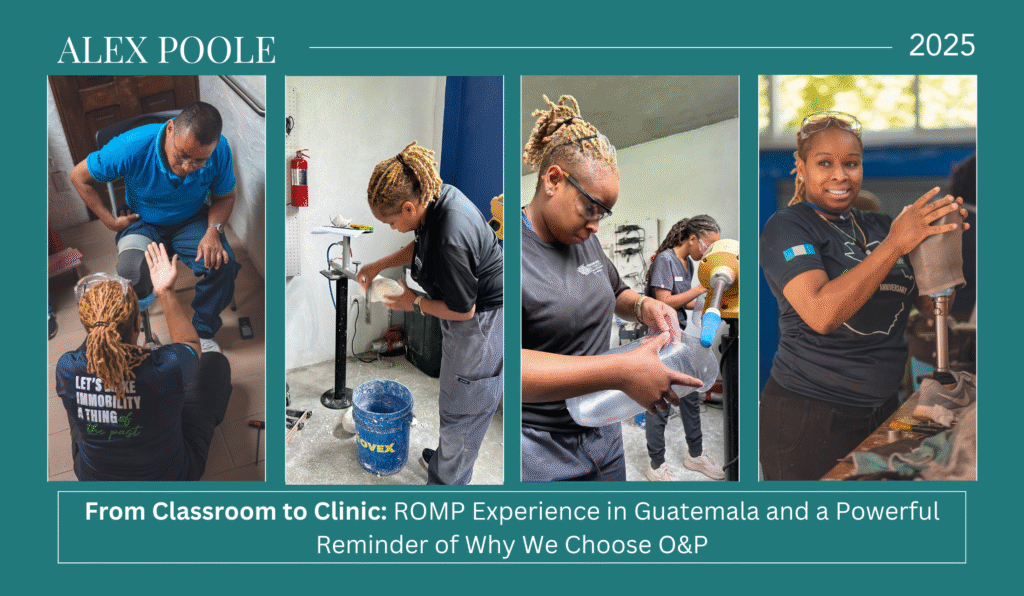
A principios de este año, Alexandria Poole, CPO, se unió a sus alumnos de Universidad Estatal de Kennesaw en un viaje de voluntariado con la Proyecto de amplitud de movimiento (ROMP) a Guatemala. Como el Coordinador superior de laboratorio para Máster en Prótesis y Ortesis de la Universidad Estatal de Kennesaw, Alexandria lo vio como una oportunidad para guiarla en sus esfuerzos.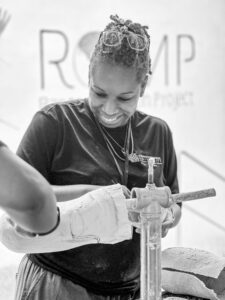 estudiantes y volver al trabajo clínico práctico que tanto le gusta.
Lo que empezó como una oportunidad de hacer de carabina se convirtió rápidamente en un poderoso recordatorio de por qué eligió este campo en primer lugar.
Una semana de cuidados intensivos
La clínica de Guatemala estaba repleta de gente, con un gran número de amputados por encima de la rodilla a los que se evaluaba para la implantación de rodillas con microprocesador. El equipo de Alexandria también trabajó con otros pacientes, incluidos aquellos con amputaciones de miembros superiores y por debajo de la rodilla. Uno de sus momentos más destacados fue ver a sus estudiantes trabajar juntos para completar prótesis bilaterales por debajo de la rodilla, desde la evaluación hasta el ajuste final, una experiencia que se ha convertido en toda una experiencia.que la mayoría de los estudiantes rara vez consiguen antes de la residencia.
Se encontró con pacientes inolvidables, como un hombre que había tallado su propia prótesis de madera a partir de un árbol y había utilizado un neumático para el pie. “Su artesanía era increíble”, dice Alexandria. “Fue un poderoso recordatorio de que con las herramientas adecuadas, la gente puede hacer cosas increíbles”.”
Dónde Adja estabilidad encaja
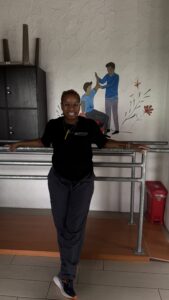
WhSi bien su viaje ROMP no implicó la instalación de Click Medical Alexandria vio claras posibilidades de marcar la diferencia, sobre todo para los nuevos amputados que no acuden a revisiones frecuentes.
“En EE.UU., un nuevo amputado puede recibir una nueva prótesis en seis meses, a medida que su miembro cambia. Pero en el caso de los pacientes con ROMP, pueden pasar años antes de que se les vuelva a ver”, explica Alexandria. “Con las prótesis ajustables, se puede afinar el ajuste a lo largo del tiempo, manteniendo la suspensión segura y la comodidad alta, sin sustituir el encaje”.”
Para los pacientes de zonas remotas, esto podría significar caminar con confianza durante mucho más tiempo antes de necesitar una sustitución completa, lo que mejoraría tanto su movilidad como su calidad de vida.
De cara al futuro
Alexandria dice que iría “absolutamente” a otro viaje de ROMP: “Es una mezcla increíble de enseñanza, aprendizaje y ayuda. Y la gratitud de los pacientes es inolvidable”.”
También anima a otros profesores y médicos a participar, tanto como voluntarios como donando componentes protésicos que no se utilicen. a la misión de ROMP.
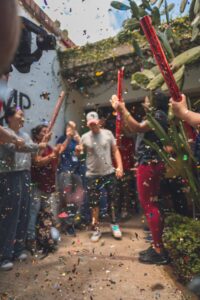
La misión de ROMP es garantizar el acceso a una asistencia protésica de alta calidad a las personas desfavorecidas, mejorando su movilidad e independencia.
 Spanish
  English
  French
  German
  Italian
  Arabic
  Ukrainian
  Japanese